
Building a restaurant website in 2026 feels a lot like getting your place ready before the first guests walk in. You want everything to look inviting, not too stiff, and honestly, a little bit personal. People judge a spot faster than ever now, and your website becomes the first space where they decide if your food is worth their time.
Most people don’t call anymore. They check your site for hours, prices, and photos, hoping to get a small taste of your place without stepping outside. If your restaurant website feels warm and clear, they stay longer and start trusting your food before they even smell it.
What makes this even more important is how the internet keeps shaping dining habits. Search results can bring new guests daily if your website feels steady and well-built.
Some restaurant owners think the website is just another chore, but it actually becomes a quiet worker that never takes a break. It talks to people while you sleep and keeps your brand alive even on slow days.
In this blog, you will learn about building a strong restaurant website in simple steps.
TL;DR
- A restaurant website gives customers the answers they want before they even step inside.
- It helps people trust your food through honest photos and a simple design.
- A good website brings steady traffic from search results without extra effort.
- Clear ordering and reservations make customers stay longer and return often.
- Your website becomes a quiet helper that works all day, guiding new visitors to your door.
Key Points
- A restaurant website shapes a customer’s first impression before they taste anything.
- Simple pages and warm visuals help visitors feel relaxed and ready to order.
- Understanding your audience makes your website feel built for real people.
- Strong ordering and reservation tools improve daily sales and reduce mistakes.
- Fresh updates and good SEO keep your restaurant visible and growing online.
Importance of Restaurant Website
A restaurant website is important because customers demand instant answers before they decide where to eat. They check for opening hours, menu prices, and they even look for small details like parking or whether they can make a reservation. Your website becomes the first thing they see, almost like the front of your restaurant, but online. When the layout feels calm and easy to understand, visitors feel more relaxed. A clean design and honest photos also help them trust your food without even tasting it yet. That first impression can push them to visit in person or order online right away.
A few small things on your website can shape how people feel about your place before they even walk in. These quick points show why a restaurant website holds so much weight and can change the way guests choose you.
- People check a restaurant website before stepping out, so it becomes their first real impression.
- Visitors want clear answers fast, like hours, prices, and menu choices.
- A clean layout makes people feel calm and ready to explore more.
- Honest photos help guests trust your food even before they try it.
- Easy navigation builds confidence and keeps people from leaving too soon.
- Quick access to reservation or ordering options can turn interest into action.
A good restaurant website quietly guides people toward choosing you. It helps them feel sure about their decision in just a few seconds.
Also Read: Restaurant App vs. Website: What Do You Really Need?
How to Create a Restaurant Website?
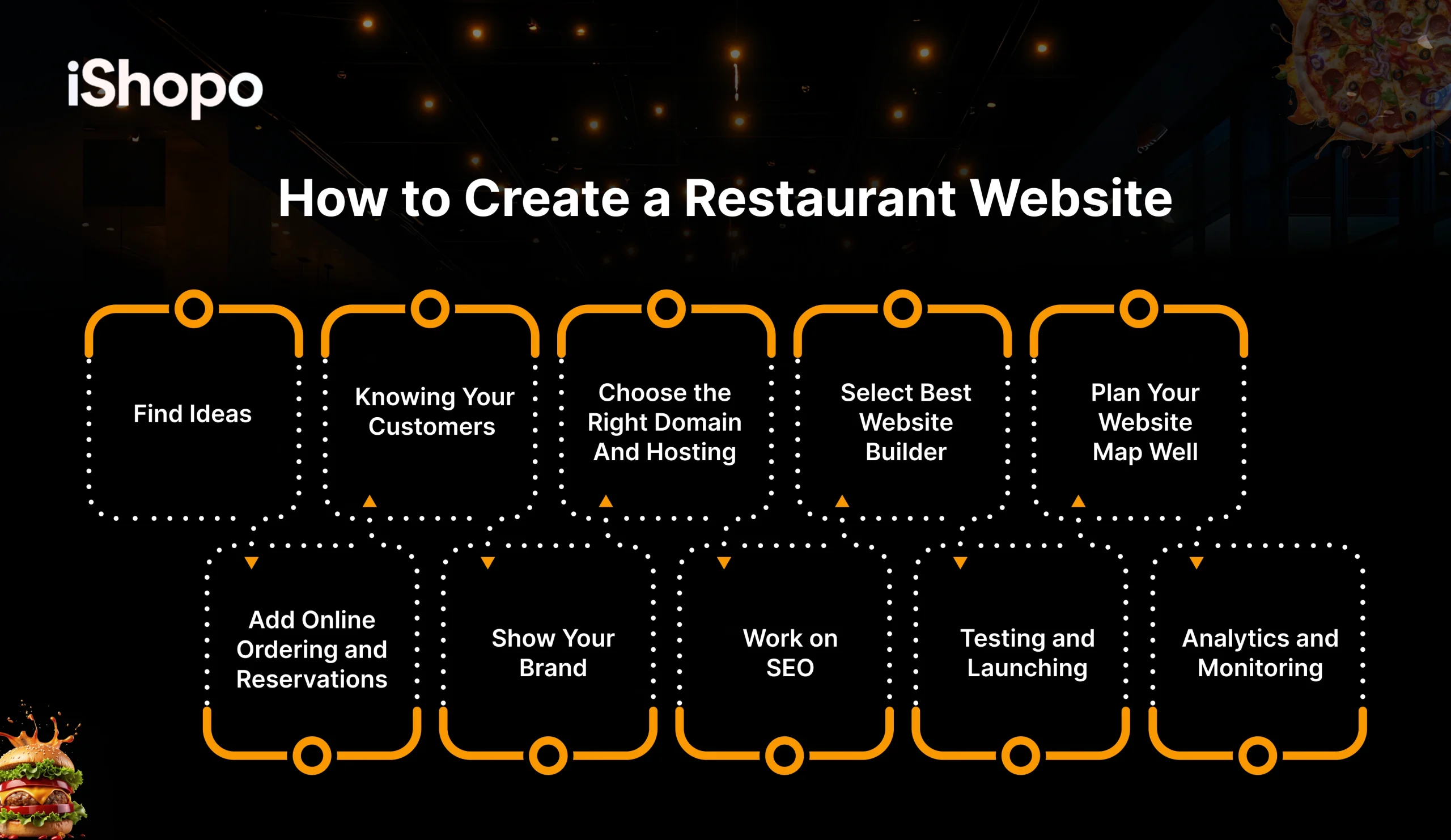
A restaurant website grows best when you understand why you’re building it and who you’re building it for. These pointers guide you through creating structure, design, flow, and ordering. Let’s see how you can create a restaurant website:
1. Find Ideas
The first step in creating a restaurant website is to look for the best ideas and take inspiration from them. Here are some ways to do it:
-
Check Out Competitor Websites
Look at how other restaurants design their pages. Notice their layout, menu flow, photos, and small features like ordering or reservations. This helps you see what customers respond to and where you can do better.
-
Use Pinterest For Design Ideas
Pinterest is great for collecting mood boards, color themes, and simple design styles that match your brand. It gives you quick visual ideas that help shape the look of your restaurant website.
-
Browse Instagram For Inspiration
Search for restaurant website designs on Instagram to see creative layouts and branding styles. Many restaurants share real examples that show what feels modern and engaging.
-
Explore Dribbble And Behance
These platforms have fresh design work from skilled creators. You’ll find new layouts, color mixes, and ideas that help your website look more polished and unique.
-
Notice What’s Missing
While browsing, pay attention to things that feel weak, like confusing menus, old designs, or missing social links. These gaps show clear chances for you to build something better.
-
Focus On Strong UX For Ordering
Study platforms that keep ordering simple. Good sites use clear menu groups, mobile-friendly buttons, and smooth cart steps. These small choices help customers order without stress and guide you toward designs that feel natural.
2. Knowing Your Customers
Understanding your customers shapes your whole restaurant website. It’s not just about colors or design but about knowing who visits your page and what makes them stay longer. When you learn what your audience cares about, and your website starts feeling like it was built for real people, not just for show. A great example is Paul Depuis, 1889. Their site feels warm because it blends their story, family roots, and clean design in a way that pulls people in. That’s the kind of connection your website should try to create, too.
-
Consider Demographics
Start from the very beginning. Consider the age, way of life, and money-spending habits of the people who come to your place. For example, a luxury restaurant is most likely to appeal to couples or working people, whereas a fast-casual restaurant will be chosen by students or families who are in a hurry. Once you understand their identity, you make pages that communicate with them and are suitable for their requirements.
-
Account for Preferences & Behavior
Go a little deeper and study what your audience likes or expects. Tourists love multilingual content and maps that help them find you. Locals might check your loyalty offers or daily specials more often. These small habits tell you how to shape your website so visitors don’t feel lost or confused.
-
Tailor Features to Audience Needs
Every customer group wants something different. Busy workers want quick ordering and simple reservation buttons. Families care about kid-friendly items and clear allergen notes. Health-focused diners want filters to sort meals by diet type. When your website gives these small comforts, people feel seen and understood.
-
Align Website Goals
Think about your main purpose. If you want more online orders, keep the flow simple and add mouthwatering photos. If reservations matter more, make the booking option easy and send quick confirmation emails. Keeping these goals clear helps visitors move smoothly without guessing their next step.
-
Optimize for Local Traffic
If your goal is to bring people into your restaurant, make sure your location, hours, and directions appear clearly on your site. Strong local SEO helps you show up when someone nearby searches for food. This tiny step brings more walk-ins without extra effort.
-
Busy Professionals
These customers want speed. Saved cards, fast reorders, and scheduled pickup times make their lives easier. When they can place a morning order for later, they feel your site respects their routine.
-
Families
Give them peace of mind. Add allergen details, show family meal packs, and let them filter items for kids. If your community is diverse, multilingual options help everyone feel welcome.
-
Health-Conscious Diners
Such visitors demand unambiguous nutrition information and the availability of diet filters such as vegan, gluten-free, or keto. If your website empowers them to decide with confidence, then they will have even more trust in your restaurant.
-
Accessibility for All Users
Features like readable text, keyboard navigation, and screen-reader support not only help people with disabilities. They improve the experience for everyone. A website that everyone can use always feels more open and thoughtful.
3. Choose the Right Domain And Hosting
The process of choosing the correct domain and hosting is a single one of those moments that initially looks insignificant, but in reality, determines the way people perceive your restaurant on the internet. When your domain feels clear and connected to your brand, customers find you faster and feel more confident landing on your restaurant website.
-
Choose a Short, Reflective Domain Name
Keep your domain short and simple, something people can type without guessing. Try using a name that reflects your food or style, because it helps visitors understand your place before they even click.
-
Incorporate Relevant Keywords
Adding small keywords like “grill,” “cafe,” or “kitchen” can help your search ranking. Pick an extension that fits your brand, whether it’s .com, .restaurant, or something local that feels natural.
-
Ensure Seamless User Experience
Your website should feel easy from the first moment. Clear menus, simple reservation steps, and calm layouts help visitors move around without trying too hard. This matters a lot when you want to attract people from different places.
-
Select a Reliable Hosting Plan
Hosting is the residence where your website is basically staying. Pick a service that will maintain the good running of your pages. Offers by famous brands are usually equipped with gadgets that are specially designed for small restaurants; thus, it becomes trouble-free to handle things.
-
Prioritize Speed and Uptime
A slow website can chase people away in seconds. Pick hosting that promises fast loading and very little downtime, even when you’re running offers or when many customers visit at once.
-
Look for Added Features
Extra features like free SSL, automatic backups, and good customer support save you from big headaches later. These small additions keep your restaurant website safer, quicker, and ready for daily visitors without falling apart.
4. Select Best Website Builder
Choosing the best website builder for your restaurant feels a lot easier when you know what truly matters. Some builders are made just for the food world, so they come with tools that already understand what your place needs. Instead of juggling apps or fixing tech issues, you get features that work together smoothly. While every builder looks similar at first, the small details decide how simple your daily work becomes. Here are a few things you should look for before you pick one:
-
Menu Management
A good builder should make your menu easy to update without any stress. You want simple sections for specials, clean item groups, and space for small notes like ingredients or dietary details. When customers can read your menu without confusion, they stay longer and often return. A builder that keeps your menu flexible lets you change things whenever you need, and that helps your restaurant feel fresh.
-
Online Ordering And Reservations
A strong builder should offer online ordering and reservations right on the website. This makes life easier for both you and your customers. People like ordering fast, and many prefer booking tables online instead of calling. A recent survey even showed that almost half of Gen Z likes online delivery more. When these tools work smoothly, you get fewer mistakes, happier guests, and better control over your daily flow.
-
Ease Of Use And Design Flexibility
You shouldn’t feel lost when you open the builder. It should feel simple and let you adjust things like colors, photos, fonts, and layout without calling someone for help. When you can shape your pages freely, the whole site starts looking more like your actual place. Design flexibility gives you the freedom to try different ideas until everything feels right.
-
White-Glove Setup
Full support from kickoff to delivery is something that some builders provide, and it can be a great comfort to you. By this white-glove installation, it means their crew takes care of the complicated parts, puts in your content, mends small issues, and keeps the site stable. It is time away from worry that you would otherwise have to spend, and it allows you to concentrate on your restaurant business. It is, in fact, quite similar to a small tech team that is there for you but works silently in the background.
-
Pricing And Integrations
Choose a builder that fits your budget but still gives you the features your place needs. Look for plans that include things like analytics, custom designs, or extra tools for growth. Check if it connects smoothly with your POS system, reservation tools, or ordering system. When all parts work together, your daily tasks become easier, and the whole website feels stronger.
| Platform | Pricing Model | Best For | USP |
| ishopo | Monthly subscription with advanced features | Restaurants looking for smooth, commission-free ordering with long-term control | Offers a clean, direct ordering system, full customer data ownership, simple CRM tools, and a setup that feels more polished and scalable than most options in this space. |
| Orderable | Per-order fees + monthly subscription | Restaurants focused on direct online ordering | Built mainly for restaurant orders, with strong POS connections and a straightforward flow that works well for small operations. |
| Squarespace | Monthly subscription ($15–33/mo) | Small restaurants want a full website and simple ordering | Known for beautiful templates and an all-in-one setup that helps beginners create clean, modern pages without much effort. |
| Jotform | Freemium model with basic features | Budget-friendly restaurants | Great for simple ordering forms, quick setup, and basic customization without needing technical experience. |
| Toast POS | Per-location + transaction fees | Full-service restaurants already using Toast | Strong POS and online ordering blend, making it easy to manage everything from one system. |
5. Plan Your Website Map Well
Planning your website map feels a bit like deciding how guests walk through your restaurant for the first time. You want their path to feel natural, calm, and even a little welcoming. A sitemap becomes your small blueprint, helping visitors and search engines move around without stress. When each page connects to your brand, your goals, and the way you serve people, your restaurant website starts to feel more honest and thoughtful. Below are the main pages most restaurants rely on, and each one plays its own part in shaping a smooth online experience.
-
Homepage
Your homepage is your first chance to make people feel at ease. Keep it simple and warm with your restaurant name, logo, and a clear button for reservations or online orders. Add real photos of your food and space so visitors get a true feeling of what you offer. Highlight a few menu items, your location, and reviews that show honest customer stories. Make sure visitors can move to other pages easily from here.
-
Menu
Your menu page becomes the heart of your website. People come here first when deciding what to order. Keep dishes grouped in clear sections, and add photos when you can because visuals help people choose faster. Include prices, seasonal items, and short descriptions so everything feels easy to understand. A clean and friendly menu keeps visitors from feeling overwhelmed.
-
Online Ordering
An online ordering page helps customers grab their favorite meals without waiting on the phone. They should be able to pick items, split bills, leave tips, and even schedule orders for later. As the owner, you also get more control over delivery areas and order flow. When the whole process feels quick and simple, customers come back more often, which naturally boosts your revenue.
-
Reservations
Adding reservations to your website saves time for both you and your guests. Many people prefer booking online instead of calling. Let them choose the day, time, and party size in a clean layout. When this step feels smooth, customers trust your place more and arrive with confidence, knowing their table is waiting.
-
Gallery
A gallery helps people imagine the experience before they walk in. Show photos of your dishes, dining space, events, and even moments from your kitchen. If you use Instagram often, connect it to your site so fresh pictures load on their own. These small glimpses build excitement and curiosity.
-
Contact Page
Make it easy for people to reach you. Share your address, phone number, hours, email, and social pages in a clear layout. Many guests check these details before choosing where to eat. Keeping this info in your footer helps them find it fast from any page.
-
About Page
Your about page tells the story behind your restaurant. Share how it started, what inspired you, and what values guide your team. Introduce your chefs or staff to make things more personal. When visitors feel connected to your story, they’re more likely to try your food and return again.
-
Testimonials
People trust real voices more than anything. Add reviews from guests who love your food or service. If any magazine or blog wrote about you, share that too. These small pieces of praise help new visitors feel more confident choosing your restaurant, both online and in person.
Read Also: How to Create Your Own Restaurant Website
6. Add Online Ordering and Reservations
The next step in creating a website for your restaurant is adding online ordering and reservation features. Let’s learn more about it through the following points:
-
Simple Online Ordering
Online ordering should feel quick and calm, almost like tapping a few buttons and getting on with your day. Keep the steps short, use clear labels, and make items easy to choose. When customers finish an order without stopping to think, they feel your restaurant respects their time and routine.
-
Smooth Reservation Flow
Many people prefer booking a table online instead of calling. A clean reservation tool helps them pick a date, time, and group size in seconds. When this process feels steady and simple, guests feel more confident about their visit and arrive knowing their table is waiting.
-
Reduce Mistakes and Stress
Online ordering and reservations cut down on phone calls and misheard details. This gives your staff more breathing room and keeps things organized during busy hours. Fewer mix-ups mean happier customers and a kitchen that runs without sudden surprises.
-
Better Planning for Busy Hours
These tools help you see what’s coming. You know which hours will be packed, how many orders might arrive, and when you need extra hands. This small bit of clarity makes your daily workflow smoother and keeps service steady.
-
More Convenience, More Returning Customers
When customers feel that your restaurant website makes life easier, they come back. A simple order today turns into a repeat visit next week. Convenience builds trust quietly, one tap at a time.
7. Show Your Brand
Showing your brand on your restaurant website is really about helping people feel your place before they ever walk in. The colors, the photos, and the small moments you choose to share all come together to create a vibe that feels honest. When these pieces match your food and atmosphere, visitors start to understand who you are without needing a long explanation. A good brand feels natural, not forced, and makes people feel like they already know your space a little.
-
Define Your Brand’s Identity
Start by understanding the personality of your restaurant. Is it warm and casual, bright and trendy, or calm and fine-dining? Your layout, colors, and fonts should match the mood people feel when they sit at your tables. This small choice keeps your online and offline experiences connected.
-
Design a Memorable Logo
Your logo should feel like a tiny snapshot of your restaurant. It doesn’t need to be fancy, just something that carries your style in a simple shape or mark. A good logo sticks in people’s minds and makes your brand feel steady.
-
Create a User-Friendly Layout
Your layout should feel easy, like walking through a space where everything is placed with care. Visitors should find the menu, photos, and contact details without guessing. When the layout feels natural, people stay longer and explore more.
-
Incorporate Prominent CTAs
Clear buttons like “View Menu,” “Book a Table,” or “Order Online” guide visitors toward taking action. Place them where they feel obvious but not pushy. Good CTAs move people forward and help them get what they want without confusion.
-
Optimize for Mobile
Most people use their phones, so your restaurant website should work just as smoothly on small screens. Ordering, booking, and finding directions should feel simple and quick. A site that works well on mobile makes your brand look thoughtful.
-
Choose Fonts That Fit Your Style
Fonts also tell a quiet story. Pick ones that match your restaurant’s personality while staying readable. Soft, clean fonts make people feel calm, while bold ones can add energy. Keep it simple so everything stays clear.
-
Pick the Right Colors
Colors set the mood instantly. Warm shades like red or orange bring energy and appetite. Blue and green feel fresh and calm. Neutral tones feel elegant. Choose one main color and a few accents so your site looks balanced. When the palette matches your food and space, the whole brand feels stronger.
8. Work on SEO
Working on SEO is one of those steps that quietly lifts your restaurant website higher without you noticing at first. Once your pages are in place, you want search engines to understand what your site is about. Good SEO for restaurant helps more people find you when they search for places to eat, order from, or visit. It’s not about doing everything at once but about setting up small habits that make your website stronger over time.
-
Use Relevant Keywords
Think about the words people type when they look for a place like yours. These simple search terms help search engines connect customers to your restaurant website. If someone runs a Thai spot in New York, using phrases like “Thai food delivery in New York” feels natural and helps the site show up more often. Spread keywords across your pages in a calm way so they blend in with your content and still feel human.
-
Optimize Your Google Business Profile (GBP)
Your Google Business Profile helps people find your location, check your hours, and contact you fast. Make sure your name, address, and phone number match exactly everywhere. Small mistakes confuse search engines. A complete profile also encourages people to call or visit without digging through your website. When this information stays fresh, your restaurant website gains more trust from search engines and real visitors.
-
Optimize Meta Titles and Descriptions
Every page on your restaurant website should have its own meta title and small description. These short lines appear in search results and help people decide if they want to click. Use simple keywords, but keep the message warm and clear. When titles and descriptions match your content, search engines understand your site better, which slowly improves your ranking.
-
Leverage Reviews and User-Generated Content
Reviews tell search engines that people like your restaurant. Even small comments, shared photos, or tagged posts help your website feel more active. When guests say good things about your food, it builds trust for new visitors, too. Add these pieces to your website because they show real voices. Search engines enjoy seeing proof that people talk about your business.
-
Improve Website Speed
A slow website pushes people away quicker than you think. Search engines notice this and lower your ranking. Make your restaurant website load fast by using good hosting, shrinking big images, and removing heavy files. When pages open quickly, visitors stay longer and explore more. This better experience boosts your site in search results and makes customers feel happier from the start.
9. Testing and Launching
Testing and launching your restaurant website feels a bit like checking the kitchen before a rush. You want to make sure everything works the way it should, so visitors never hit a rough spot. This final step helps you fix small problems before real customers see them. A calm and careful testing round makes your website stronger, safer, and ready for daily visits. Here’s a simple way to walk through it.
-
Conduct Integration Testing
Check how all parts of your website work together. Your menu, forms, buttons, and ordering steps should move smoothly from one action to the next. If something feels slow or confusing, adjust it now before launch.
-
Test Device Compatibility & Cross-Browser Functionality
Open your website on different phones, tablets, and laptops. Try it on various browsers too. The goal is to give every visitor the same steady experience, no matter what device they use to explore your restaurant.
-
Focus on Website Speed
People lose patience fast when pages take too long. Test how quickly your website loads on both strong and weak networks. If it drags, compress images or clean extra elements so your pages open smoothly.
-
Conduct Security Testing
Safety matters a lot. Check that customer details stay protected during payments or sign-ups. Make sure your SSL certificate works and your pages run on HTTPS. This gives visitors comfort when sharing personal information.
-
Test Functional Elements
Click every button, link, and form like a curious customer. Try placing a fake order or booking a table. Fix spelling errors, broken links, or anything that leads to a dead end. When everything feels steady, your website is ready to go live with confidence.
10. Analytics and Monitoring
Taking care of your restaurant website after launch feels a bit like checking on tables during a busy night. You can’t just set things up once and walk away. You keep an eye on how everything is running, fix small problems as they show up, and watch how people move through your site. These simple habits help your website stay steady, helpful, and welcoming long after launch. Here are a few ways to keep things healthy and growing.
-
Monitor & Optimize Website Performance:
Check how your website behaves on normal days and busy days. Look at user feedback, fix bugs, and test important steps like reservations or online orders. When everything works smoothly, visitors feel safe staying longer.
-
Keep Content Fresh & Engaging:
Update your pages with small things customers enjoy, like new offers, short blogs, or event notes. Keep your social media and website in sync so everything feels connected. Fresh content gives people a reason to return.
-
Use Analytics to Track Key Metrics:
Analytics tools show how customers move through your restaurant website. You learn where they click, where they stop, and what they ignore. These insights help you adjust your SEO, titles, and layout so your site grows naturally in search results.
-
Stay on Top of Customer Service:
Answer questions fast and stay kind when someone reaches out. A quick reply builds trust and makes people feel cared for. When customers feel heard, they return more often and share your place with others.
Also Read: How to Create a Restaurant Ordering Website
Essential Features Every Restaurant Website Should Include
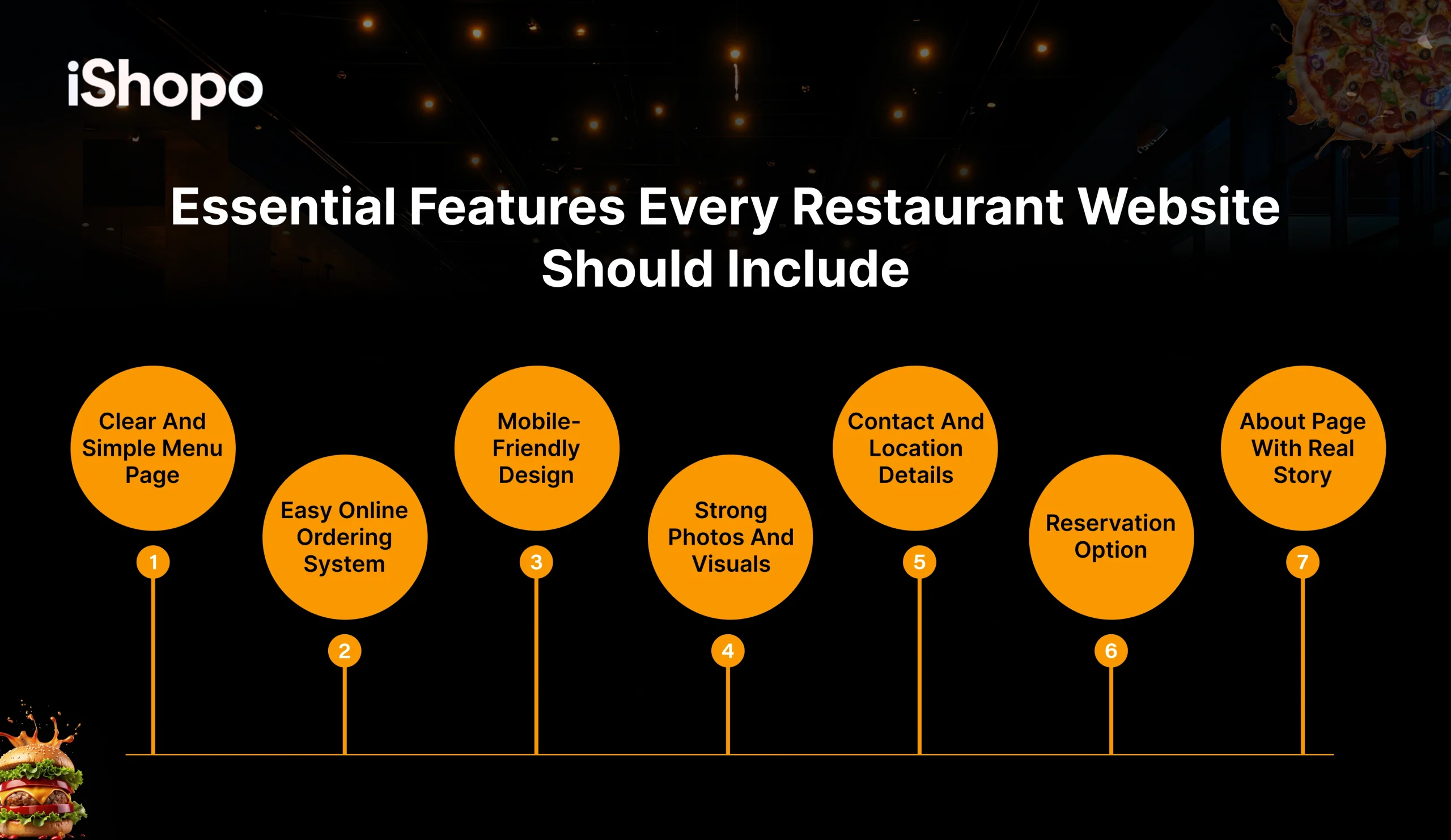
A restaurant website works best when it includes features that match real customer needs. These features make the site useful, warm, and ready for daily visits. The following are the features every restaurant website must have:
1. Clear And Simple Menu Page
Your menu page helps customers picture your food before they order. Use clear photos, short item names, and easy sections so people don’t feel lost. A friendly menu builds trust and helps guests choose faster. Showing prices in a clean layout helps them plan what to order. This page often decides whether someone stays or leaves.
2. Easy Online Ordering System
A smooth online ordering system makes your restaurant website more helpful for people who want quick meals. Clear buttons, fewer steps, and fast loading help them finish orders without stress. When the process feels simple, customers return again and again. A good ordering flow also reduces mistakes and keeps things steady during busy hours.
3. Mobile-Friendly Design
Most people check restaurant websites from their phone, so your site must adjust to small screens. Buttons should be large enough to tap without trouble. Menus should load fast and look clean. A mobile-friendly site improves the whole experience because visitors don’t want to zoom or struggle to read. This small detail brings more returning customers.
4. Strong Photos And Visuals
Photos help visitors feel your place before they ever walk in. Show real dishes, tables, lighting, and small moments that make your spot special. Avoid photos that look too staged. Honest images build comfort and let customers imagine their visit. Good visuals keep people on your website longer and improve trust naturally.
5. Contact And Location Details
Your restaurant website should make it easy for people to reach you. Add your address, phone number, map, and hours in a simple layout. Many guests check these details before picking a place. Clear contact info helps them feel ready to visit without confusion. It also improves your local search results and brings more walk-ins.
6. Reservation Option
Some customers want to book before they arrive, so a reservation button makes their plan smoother. Keep the steps short. Let them choose the time, day, and group size in a calm, organized layout. When booking feels easy, they trust your site more. It also reduces wait time and helps you manage busy days more effectively.
7. About Page With Real Story
People love knowing the story behind your restaurant. An honest about page helps them connect with your values, team, and style. Share how the restaurant started, why it matters, and what inspires you. Keep the words warm and simple. Real stories help customers feel like they know you, which makes them more likely to order or visit.
Conclusion
A strong restaurant website becomes the welcome space customers see before stepping inside. It shows your style, your food, and the care you put into each detail. When your pages stay simple, honest, and easy to follow, people feel safe exploring your place. A good restaurant website builds trust, encourages orders, and keeps visitors returning. With smooth ordering, clear photos, steady SEO, and a layout that feels natural, your site becomes a partner that supports your business each day. This steady growth helps your restaurant stay visible, warm, and ready for new guests while giving you more chances to connect with people in real moments. Visit iShopo to start building your own website today.
FAQ’s
- Why do I need a restaurant website?
A restaurant website helps people learn about your food, hours, menu, and story without calling you. Many customers check a site before they choose a place to eat. When your website feels clear and honest, they feel more confident visiting or ordering. It also helps with search results, which brings more people to your restaurant with less effort.
- How long does it take to build a restaurant website?
The time depends on how many pages you want and how familiar you are with the tools. Some simple sites take only a week, while bigger ones may take several weeks. Clear planning helps you move faster. If you use a good website builder, you can launch sooner and make small updates later as you learn what customers like.
- Should my restaurant website include online ordering?
Yes, it helps a lot. Most people enjoy quick digital steps, and online ordering makes that easy. A clear ordering flow boosts your daily sales and reduces errors. Customers love placing orders without waiting on the phone. When your restaurant website offers a calm, simple ordering experience, people return because it feels easy and safe.
- How often should I update my restaurant website?
You should update it whenever menu items change or when you add new offers or events. Fresh updates help search engines notice your site more often. They also show visitors that your place stays active. Even small changes like new photos, revised hours, or a short blog post can make your restaurant website feel alive and welcoming.
- Do reviews really matter for my restaurant website?
Yes, they matter more than most people think. Reviews help visitors feel safe choosing your place, especially when they’ve never tried your food before. Honest comments, shared photos, and simple ratings create a feeling of trust that ads cannot replace. When people see real experiences from other customers, they feel more confident ordering or visiting. Good reviews also help search engines notice your restaurant website, which brings in even more new guests without extra effort.