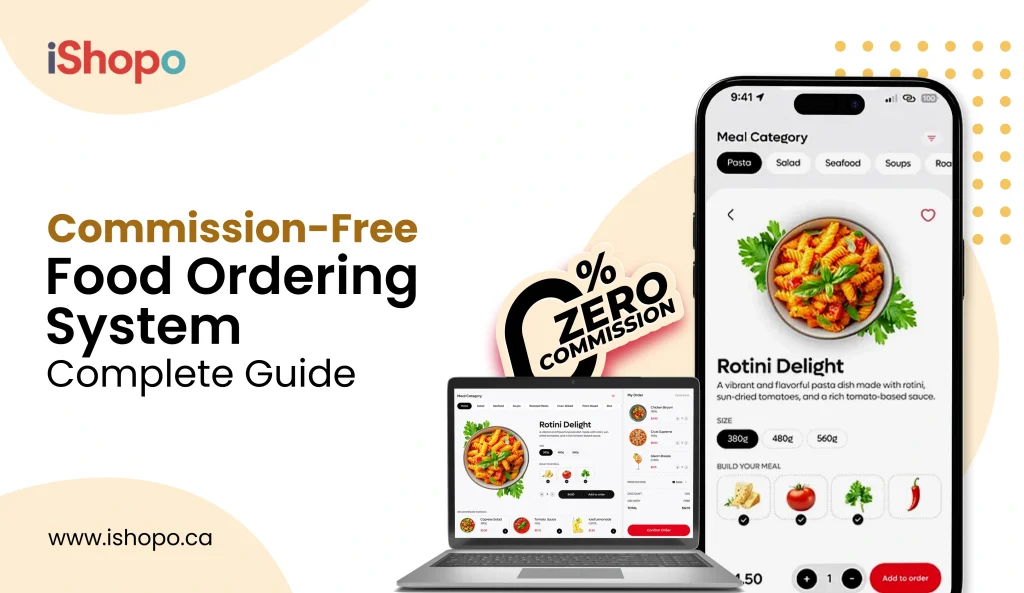

With the increasing operating expenses and the implementation of aggressive commission models, third-party ordering platforms have become less appealing to a lot of restaurants. Each order done digitally might lead to an increase in the number of orders, but usually, it just ends up lowering the profit and taking away control over the customer experience. This leads to a growth model that seems to be working fine at first, but eventually becomes very hard to sustain.
A commission-free food ordering system offers a different path forward. It allows restaurants to take full ownership of their online sales, protect margins, and build direct relationships with customers. As digital ordering continues to define how people choose where to eat in 2026, restaurants that invest in direct, commission-free ordering are positioning themselves for stronger profits and long-term stability.
This blog breaks down how a commission-free food ordering system helps restaurants increase profits, reduce platform dependency, and regain control of their online sales in 2026.
- Third-party ordering platforms reduce restaurant profits through high commissions and limited control.
- A commission-free food ordering system helps restaurants retain revenue and own customer relationships.
- Direct ordering improves margins, pricing control, and long-term stability.
- Restaurants adopting direct ordering are better positioned for growth in 2026.
- Third-party marketplaces charge significant commissions that reduce already thin restaurant profit margins and create long-term dependency.
- A commission-free food ordering system allows restaurants to accept orders directly through branded channels without paying per-order fees.
- Direct ordering gives restaurants full ownership of customer data, enabling loyalty programs, targeted marketing, and repeat business.
- Removing commissions improves profitability by lowering cost per order and allowing consistent pricing across all channels.
- Modern commission-free ordering systems support mobile-first experiences, real-time menu control, flexible payments, and efficient order management.
- Although switching to direct ordering requires effort, restaurants that invest in it gain stronger financial control and sustainable growth potential.
Why Restaurants Are Moving Away From Third-Party Ordering in 2026?
Restaurants are increasingly questioning the value of paying steep fees just to be visible online. Third-party platforms helped drive online demand in the early days of digital ordering, but the costs of staying on those apps are catching up with many operators. As a result, restaurant owners lose a significant portion of each sale before revenue reaches their business.
Most third-party delivery platforms charge between 15 and 30 percent commission on every order. For restaurants already working with tight margins, that can turn profitable sales into break-even or outright losses and reduce the incentive to rely on those channels long-term. On a typical $20 order, a 25 percent commission could cut a restaurant’s profit by more than 80 percent compared with taking the order directly.
Beyond fees, restaurants also lose control of customer data and direct relationships when they depend on third-party apps. Without access to guest preferences and contact details, they struggle to build loyalty and market directly to frequent buyers, something a commission-free food ordering system makes possible by keeping ownership of orders and customer interactions in-house.
As the industry looks ahead to 2026, more restaurants are choosing to reduce platform dependence and instead focus on direct, commission-free ordering solutions that protect profits and strengthen customer ties. A shift toward self-owned digital ordering channels that put revenue and control back where it belongs with the business itself.
What a Commission-Free Food Ordering System Means for Restaurants
A commission-free food ordering system gives restaurants full ownership of their online sales instead of renting access through third-party platforms. Orders come directly through the restaurant’s own branded channels, which means no per-order commission cutting into already thin margins. Every sale contributes fully to revenue, making online ordering a sustainable growth channel rather than a costly dependency.
More importantly, this model puts restaurants back in control of the customer relationship. Guest data, order history, and preferences stay with the business, allowing smarter marketing, stronger loyalty programs, and more personalized experiences. Over time, this direct connection leads to higher repeat orders and better lifetime value.
For restaurants, a commission-free food ordering system is not just about saving money. It is about building a reliable digital foundation that supports profitability, brand consistency, and long-term independence in an increasingly competitive market.
Also Read: Top 10 Online Food Ordering Systems for Restaurants
The True Cost of Third-Party Ordering Platforms Most Businesses Overlook
Third-party ordering platforms often appear convenient, but the financial impact runs deeper than a simple commission rate. Many restaurants focus only on the percentage charged per order and overlook the long-term costs that affect profitability, branding, and customer relationships.
Key Costs Restaurants Often Overlook
- High Commission Fees: Most third-party platforms charge between 15 and 30 percent per order. Over time, these fees significantly reduce margins and make online ordering less sustainable compared to a commission-free food ordering system.
- Eroded Profit Margins: When commissions eat into revenue, restaurants are forced to either raise menu prices or absorb the loss. Both options hurt competitiveness and customer trust.
- Loss of Customer Ownership: Third-party platforms control customer data, limiting a restaurant’s ability to build loyalty, run targeted campaigns, or encourage repeat orders. A commission-free food ordering system keeps this data where it belongs.
- Limited Brand Visibility: On marketplaces, restaurants compete side by side with similar offerings. Branding, storytelling, and differentiation are restricted, weakening long-term brand recognition.
- Platform Dependency Risk: Changes in platform algorithms, fee structures, or policies can impact sales overnight. Relying heavily on these platforms creates uncertainty that is difficult to manage.
- Additional Marketing Costs: To stay visible within crowded apps, restaurants often pay for promotions and featured listings, adding another layer of expense beyond commissions.
When these factors are viewed together, the value of a commission-free food ordering system becomes clear. It reduces hidden costs, strengthens control, and turns online ordering into a profitable, long-term channel rather than an ongoing expense.
How to Set Up a Commission-Free Food Ordering System Step by Step
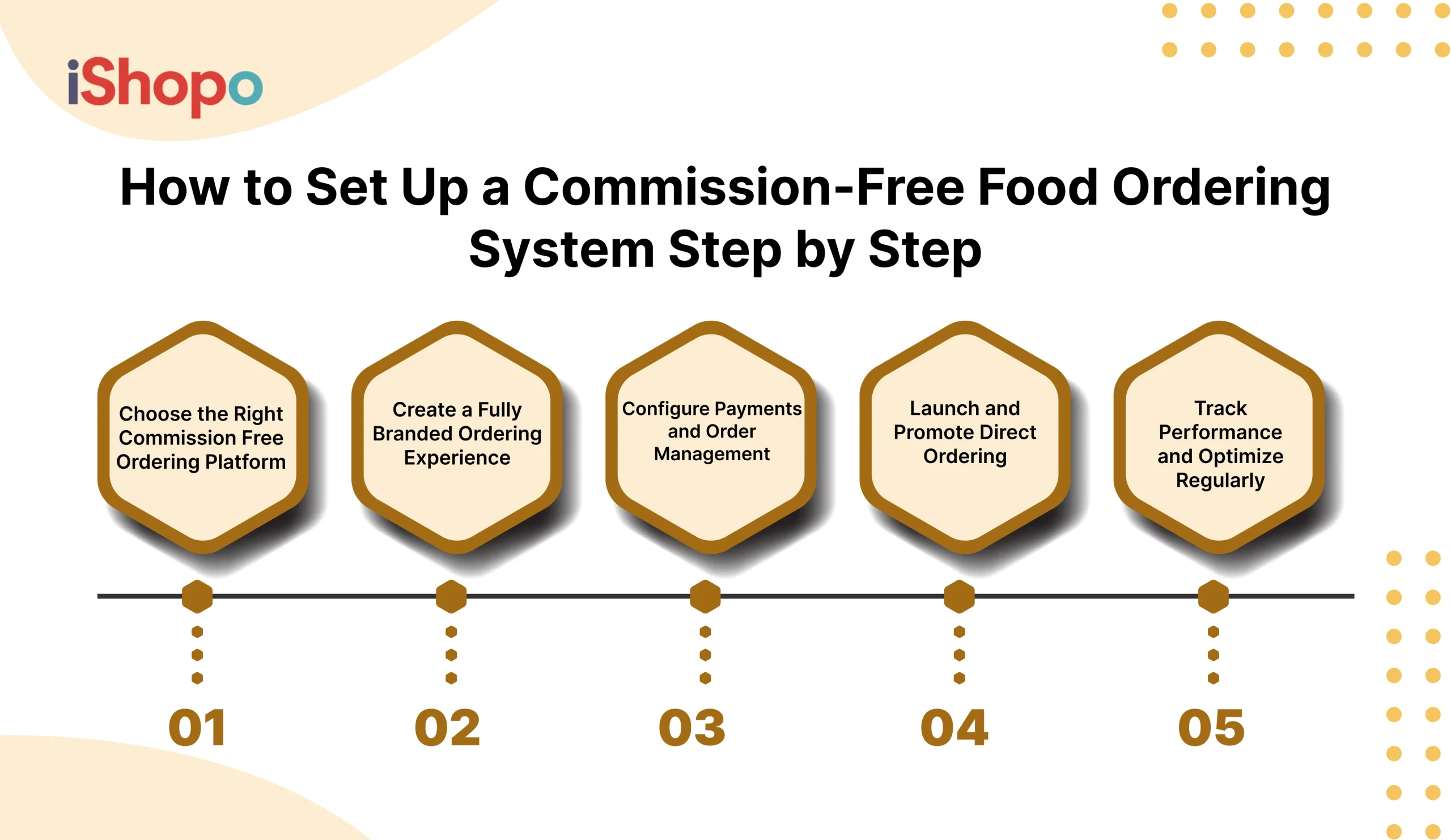
Setting up a commission-free food ordering system does not require complex technology or long development cycles. Restaurants can move to direct ordering quickly if the process is approached the right way.
Step 1: Choose the Right Commission Free Ordering Platform
Start by selecting a platform built specifically for restaurants, not a generic e-commerce tool.
- Look for zero commission per order
- Ensure it supports both pickup and delivery
- Check compatibility with your existing POS and payment systems
- Confirm it offers branded web and mobile ordering
Step 2: Create a Fully Branded Ordering Experience
Your ordering system should look and feel like an extension of your restaurant.
- Apply your logo, brand colors, and menu style
- Customize menu categories, item descriptions, and pricing
- Set clear preparation times and order rules
- Optimize the layout for mobile users
Step 3: Configure Payments and Order Management
A commission-free food ordering system should make checkout and operations simple.
- Enable multiple payment options such as cards and digital wallets
- Set order alerts for kitchen and front staff
- Define pickup, delivery, and scheduling settings
- Test the full order flow from checkout to fulfillment
Step 4: Launch and Promote Direct Ordering
Once the system is live, shift customers toward your direct channel.
- Add ordering links to your website and social profiles
- Promote direct ordering through in-store signage and packaging
- Offer exclusive deals only available through your own ordering system
- Train staff to guide customers toward direct orders
Step 5: Track Performance and Optimize Regularly
Ongoing improvements help maximize results.
- Monitor order volume, average order value, and repeat purchases
- Use customer data to run targeted promotions
- Update menus and offers based on demand trends
- Continuously refine the experience to increase conversions
A commission-free food ordering system is not just a setup. It is an ongoing strategy that helps restaurants protect margins, strengthen customer relationships, and build a reliable digital sales channel.
Read Also: Food Online Ordering Systems: Boosting Restaurant Success
How Direct Commission-Free Ordering Improves Restaurant Profit Margins
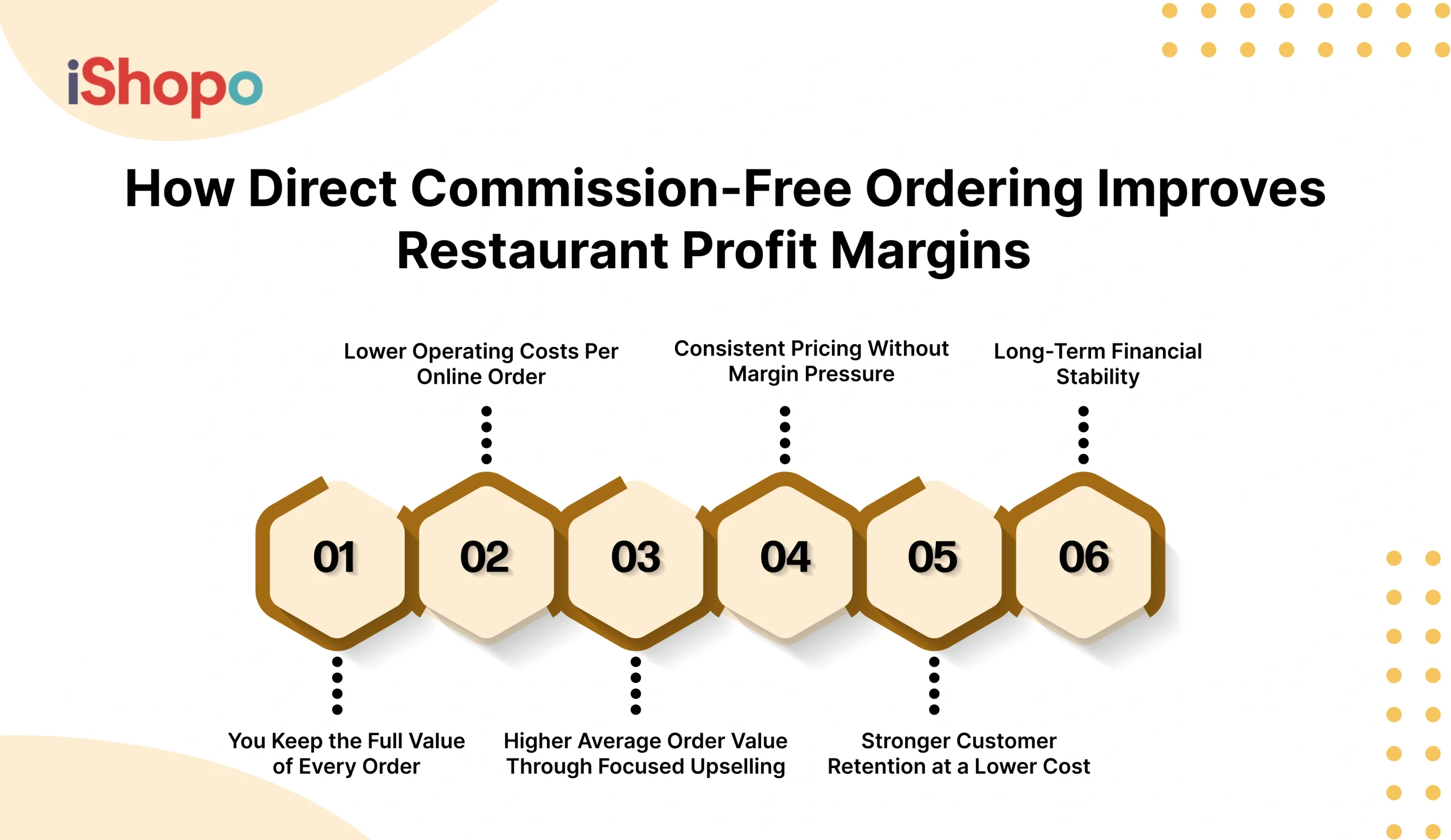
Direct ordering does more than remove commission fees. It changes how revenue flows through the business and how predictable profits become over time. A commission-free food ordering system gives restaurants the ability to control costs, pricing, and customer relationships in a way third-party platforms never allow.
1. You Keep the Full Value of Every Order
Third-party platforms take a percentage from every transaction, regardless of how thin your margins already are. With a commission-free food ordering system, the entire order value goes directly to your business. This alone can turn online ordering from a low-margin channel into a reliable profit driver.
2. Lower Operating Costs Per Online Order
Direct ordering reduces the hidden expenses tied to marketplaces, including promotional fees and visibility costs. Over time, the cost to process each order drops, allowing restaurants to scale online sales without increasing expenses at the same rate.
3. Higher Average Order Value Through Focused Upselling
When customers order directly, they are not distracted by competitor listings or ads. Restaurants can guide choices with smart menu layouts, add-ons, and combo offers. This results in larger basket sizes and better margins per transaction.
4. Consistent Pricing Without Margin Pressure
Many restaurants increase menu prices on third-party apps to offset commissions. A commission-free food ordering system removes this pressure, allowing consistent pricing across channels while protecting profitability.
5. Stronger Customer Retention at a Lower Cost
Direct access to customer data makes it easier to build loyalty programs, send personalized offers, and encourage repeat orders. Repeat customers cost less to acquire and spend more over time, which directly improves margins.
6. Long-Term Financial Stability
As direct orders increase, reliance on third-party platforms decreases. A commission-free food ordering system creates a sustainable revenue model that supports growth without sacrificing profit.
As direct orders grow, dependency on third-party platforms declines. A commission-free food ordering system helps restaurants create a stable, profitable online ordering strategy that supports sustainable growth in 2026 and beyond.
Also Read: Top 10 Restaurant Ordering System for Smart Solution
Must-Have Features in a Modern Commission-Free Food Ordering System
As online ordering becomes a core revenue channel, restaurants need more than a simple digital menu. A commission-free food ordering system should support operational efficiency, strengthen brand presence, and drive profitable growth. The right features ensure the system works as a long-term business asset rather than just an ordering tool.
- Complete Brand Ownership: The ordering experience should fully reflect your restaurant’s identity across web and mobile. From logos and colors to menu layout and messaging, brand consistency builds trust and encourages customers to order directly instead of through third-party apps.
- True Zero Commission Structure: A genuine commission-free food ordering system does not deduct a percentage from each order. This allows restaurants to keep the full value of every sale and maintain healthier profit margins as online order volume grows.
- Optimized Mobile Ordering Experience: With most customers ordering on their phones, speed and simplicity matter. A clean, mobile-first design reduces friction, shortens checkout time, and improves conversion rates.
- Real-Time Menu and Inventory Control: Restaurants should be able to update menu items, prices, modifiers, and availability instantly. This prevents order errors and ensures customers always see accurate information.
- Flexible Payment Options: Support for multiple payment methods, including digital wallets, improves convenience and reduces abandoned orders at checkout.
- Advanced Pickup and Delivery Configuration: Control over preparation times, delivery zones, fees, and scheduled orders helps restaurants manage operations efficiently without overwhelming staff.
- Customer Data and Performance Insights: Access to customer profiles, order history, and sales trends enables better decision-making and more effective marketing strategies.
- Built-In Promotions and Loyalty Programs: Targeted discounts, promo codes, and loyalty rewards encourage repeat orders and increase customer lifetime value.
- Efficient Order and Kitchen Management: Real-time order notifications, status updates, and workflow controls help teams handle high order volumes with accuracy and speed.
A well-designed commission-free food ordering system simplifies operations, protects margins, and helps restaurants build a reliable direct ordering channel that supports sustainable growth in 2026 and beyond.
Commission-Free Food Ordering System vs Marketplace Reliance
Online ordering has become essential for restaurants, but how those orders are managed makes a significant difference to profitability and long-term control. Many businesses still depend heavily on third-party marketplaces for visibility, while others are shifting toward a commission-free food ordering system to build a more sustainable model. Understanding the contrast between these two approaches helps restaurants make informed decisions for 2026 and beyond.
Commission-Free Food Ordering System
A commission-free food ordering system allows restaurants to accept orders directly through their own branded website or app. This approach prioritizes ownership, consistency, and profitability.
- Zero commission on every order, allowing restaurants to retain full revenue.
- Complete control over branding, pricing, menus, and promotions.
- Full access to customer data, including order history and preferences.
- Direct communication with customers for offers, updates, and loyalty programs.
- Predictable operating costs and stronger long-term margins.
Solutions like iShopo support this model by giving restaurants the tools to manage direct ordering without sacrificing control or revenue.
Marketplace Reliance
Marketplace platforms act as intermediaries between restaurants and customers. While they may provide short-term exposure, they often limit long-term growth.
- High commission fees that reduce profit on every order
- Limited or no access to customer data
- Restricted brand presence within crowded listings
- Dependence on platform algorithms, rankings, and policy changes
- Ongoing costs for promotions and visibility within the platform
Feature Comparison
| Aspect | iShopo Ordering System | Marketplace Platforms |
| Commission Fees | No per-order commission | 15 to 30 percent per order |
| Brand Control | Full ownership | Limited visibility |
| Customer Data | Owned by the restaurant | Controlled by the platform |
| Pricing Flexibility | Complete control | Often restricted |
| Customer Loyalty | Direct relationship | Platform-driven |
| Revenue Stability | Predictable and scalable | Commission dependent |
A commission-free food ordering system helps restaurants build direct relationships, protect margins, and create predictable revenue. Marketplace reliance may offer immediate reach, but it often comes at the expense of profitability and long-term independence.
Read Also: iShopo: Best Online Food Ordering Software for Restaurants
Common Challenges Restaurants Face When Switching to Direct Ordering
Switching from third-party platforms to direct online ordering is a strategic move, but it requires a shift in mindset, operations, and marketing. A commission-free food ordering system offers long-term benefits, yet many restaurants encounter similar challenges during the transition phase. Understanding these challenges early makes the move smoother and more successful.
- Changing Customer Ordering Habits: Customers are often comfortable using familiar marketplace apps. Convincing them to order directly takes time and repeated exposure. Restaurants need clear messaging, incentives, and consistent reminders to change behavior.
- Initial Setup and System Configuration: Setting up menus, modifiers, delivery rules, and payments can feel overwhelming at first. A commission-free food ordering system should simplify this process, but proper planning is still required to avoid mistakes at launch.
- Generating Direct Traffic and Awareness: Unlike marketplaces, direct ordering does not come with built-in discovery. Restaurants must actively promote their ordering link through websites, social media, packaging, email, and in-store communication.
- Training Staff for New Workflows: Kitchen and front-of-house teams need to adapt to a new order flow. Without proper training, orders may be missed or delayed, affecting service quality.
- Managing Multiple Ordering Channels: Most restaurants do not switch overnight. During the transition, managing both third-party and direct orders can create complexity if systems are not clearly organized.
- Ensuring a Consistent Customer Experience Direct ordering must be fast, reliable, and easy to use. If the experience feels slower or less polished than marketplaces, customers may revert to old habits.
Challenges are temporary, but the benefits are lasting. With the right commission-free food ordering system, clear customer communication, and strong operational processes, restaurants can overcome these obstacles and build a direct ordering channel that delivers higher margins and stronger customer relationships.
Why iShopo Gives Restaurants Full Control Over Online Orders
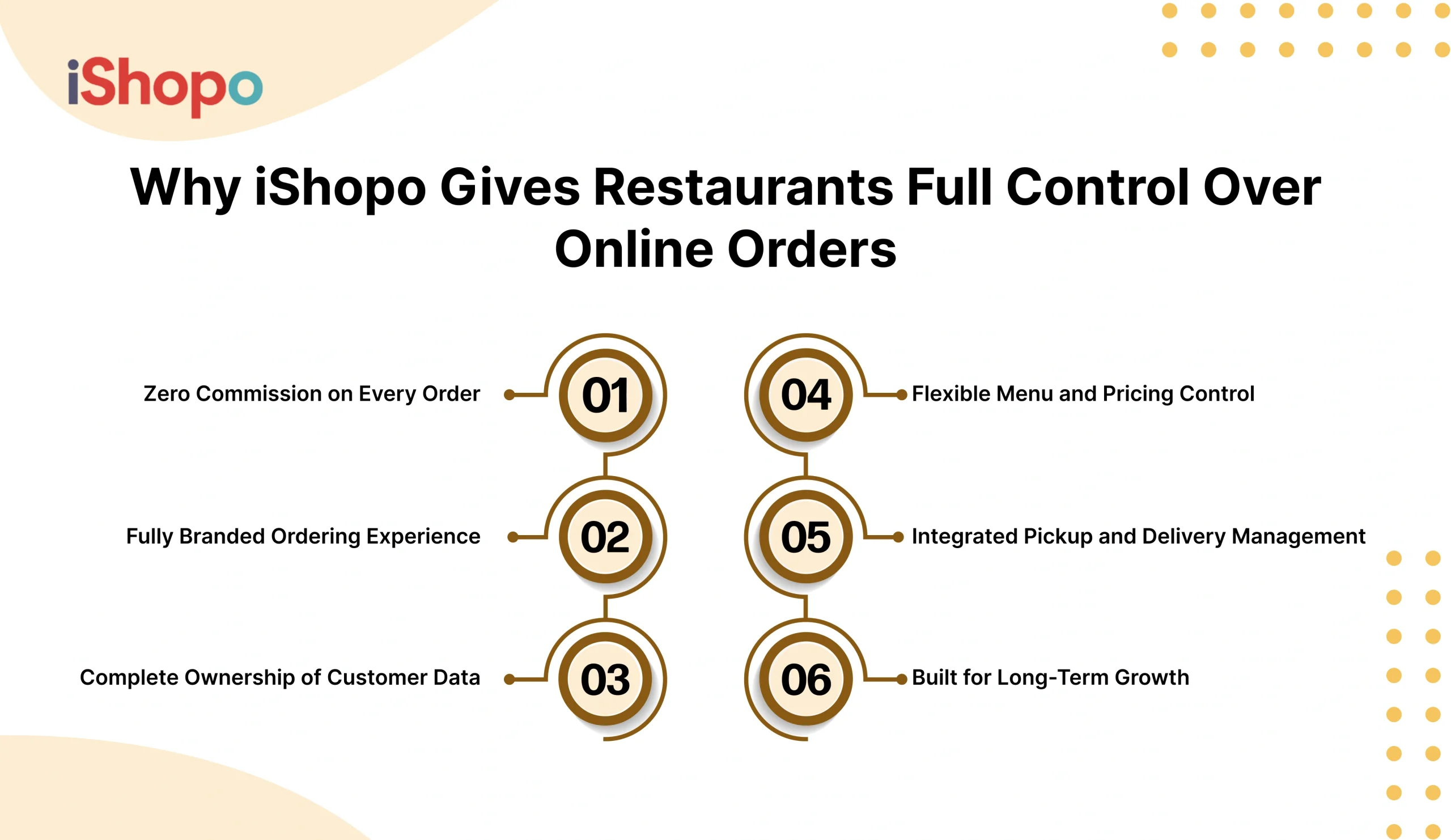
Restaurants looking to reduce dependency on third-party platforms need more than basic ordering software. They need a solution built around ownership and profitability. iShopo is designed to support a commission-free food ordering system that puts control back in the hands of restaurant owners.
- Zero Commission on Every Order: iShopo follows a true commission-free model. Restaurants keep the full value of every online order without paying a percentage per transaction.
- Fully Branded Ordering Experience: Orders are placed through the restaurant’s own branded web and mobile channels. This strengthens brand recognition and encourages customers to order directly.
- Complete Ownership of Customer Data: All customer details, order history, and insights belong to the restaurant. This makes it easier to build loyalty and run targeted marketing campaigns.
- Flexible Menu and Pricing Control: Restaurants can update menus, prices, availability, and modifiers in real time without restrictions.
- Integrated Pickup and Delivery Management: iShopo allows full control over preparation times, delivery zones, fees, and scheduling, helping restaurants manage operations efficiently.
- Built for Long-Term Growth: The platform is designed to scale as order volume increases, without rising commission costs or platform dependency.
With iShopo’s commission-free food ordering system, restaurants gain predictable costs, stronger customer relationships, and full control over their online ordering strategy.
Final Words
As online ordering becomes a core part of restaurant revenue, the choice of platform has a direct impact on long-term profitability and control. Third-party marketplaces may offer convenience, but their commission-based models often limit growth and weaken customer relationships. A commission-free food ordering system provides a more sustainable alternative by allowing restaurants to take ownership of their digital sales channel.
With iShopo, restaurants are not just avoiding commission fees. They are building a fully branded ordering experience, gaining direct access to customer data, and creating predictable revenue without relying on external platforms. iShopo is designed to support restaurants at every stage, helping them grow online sales while protecting margins and operational flexibility.
For restaurants looking ahead to 2026, the goal is no longer just to accept online orders. It is to do so in a way that supports long-term stability, stronger customer connections, and real profitability. Choosing iShopo’s commission-free food ordering system is a strategic move toward owning your online presence and shaping your future on your own terms.
FAQ’s
1. What is a commission-free food ordering system?
A commission-free food ordering system lets restaurants accept online orders directly through their own website or app without paying a percentage on each sale. Orders go straight to the business, helping protect margins, maintain brand control, and keep ownership of customer data instead of sharing it with third-party platforms.
2. How does a commission-free food ordering system help restaurants increase profits?
By removing per-order commissions, restaurants keep more revenue from every sale. Direct ordering also reduces reliance on paid promotions, supports consistent pricing, and encourages repeat customers through direct communication. Together, these factors lower overall costs and improve profit margins as online order volume grows.
3. Can small and independent restaurants benefit from commission-free ordering?
Yes. Small and independent restaurants often feel the impact of commission fees the most. A commission-free food ordering system helps them protect margins, compete with larger brands, and build direct relationships with customers without increasing menu prices or sacrificing profitability.
4. How do restaurants encourage customers to switch from third-party apps to direct ordering?
Restaurants can guide customers toward direct ordering by promoting it in store, on packaging, on their website, and through social media. Offering exclusive deals, better pricing, or loyalty rewards on direct orders helps change habits over time and builds long-term ordering behavior.
5. Is it difficult to set up a commission food ordering system?
Most modern commission-free food ordering systems are designed for quick and simple setup. Restaurants can usually upload menus, configure payments, and manage pickup or delivery settings without technical expertise. With proper planning, many businesses can launch direct ordering in a short time.
6. Does commission-free ordering support both pickup and delivery orders?
Yes. A commission-free food ordering system typically supports pickup, delivery, and scheduled orders. Restaurants can control preparation times, delivery zones, fees, and order limits, allowing them to manage operations efficiently while offering customers flexible ordering options.